
Compliance Hub
Building Energy Codes & ESG Regulations
A single reference for every regulation driving energy metering adoption — from federal energy codes to city-level building performance standards and global ESG reporting mandates.
Building performance standards and energy benchmarking laws are accelerating across the United States and internationally. These regulations require commercial and industrial buildings to install energy metering systems, report consumption data, and meet emissions reduction targets on defined timelines. Failing to comply can result in significant financial penalties. This hub provides side-by-side comparisons of metering requirements, deadlines, penalty structures, and implementation strategies for each major regulation, helping facility managers, building owners, and MEP engineers plan their compliance metering investments with confidence.
Regulatory Comparison
Key metering-related regulations at a glance. Click any row to read our in-depth analysis.
| Regulation | Jurisdiction | Scope | Key Deadlines | Penalty / Risk | Metering Requirement | Status | Code Details |
|---|---|---|---|---|---|---|---|
| NYC Local Law 97 | New York City | Buildings > 25,000 sq ft | 2024 (reporting) · 2030 (penalties) | Up to $268/ton CO₂e over limit | Whole-building + submeter recommended |
Active
|
View |
| Boston BERDO 2.0 | Boston, MA | Buildings > 20,000 sq ft | 2025 (reporting) · 2030 (first targets) | Escalating fines + alternative compliance | Emissions-based; real-time recommended |
Active
|
View |
| DC BEPS | Washington, DC | Buildings > 10,000 sq ft | 2021 (benchmarking) · 2026 (first cycle) | $7.50–$10/sq ft for non-compliance | ENERGY STAR benchmarking + submetering |
Active
|
View |
| EU CSRD | European Union (global supply chains) | Large companies & supply chain partners | 2024–2026 (phased rollout) | Varies by member state; audit liability | Granular Scope 2 data; circuit-level preferred |
Active
|
View |
| IECC 2021 | Adopted states (30+) | Commercial buildings > 25,000 sq ft | Effective upon state adoption | Building permit denial | Subcircuit monitoring per C405.12 |
Active
|
View |
| ASHRAE 90.1-2022 | National (referenced by IECC) | All commercial buildings | Effective upon jurisdiction adoption | Code non-compliance | End-use metering per Section 8 |
Active
|
View |
| IECC 2024 | Early-adopter states | Commercial buildings (expanded scope) | 2025–2027 (state dependent) | Building permit denial | Enhanced subcircuit + IRA alignment |
Emerging
|
View |
ESG & Building Performance Standards
Deep dives into city-level building performance standards and global sustainability reporting mandates that require granular energy data.



Energy Codes & Standards
Technical guides to IECC, ASHRAE 90.1, and federal metering requirements that impact every new commercial construction project.

IECC & ASHRAE 90.1 Visual Reference
Architecture diagrams, sensor selection matrices, and code adoption maps that translate energy code requirements into a buildable metering specification.
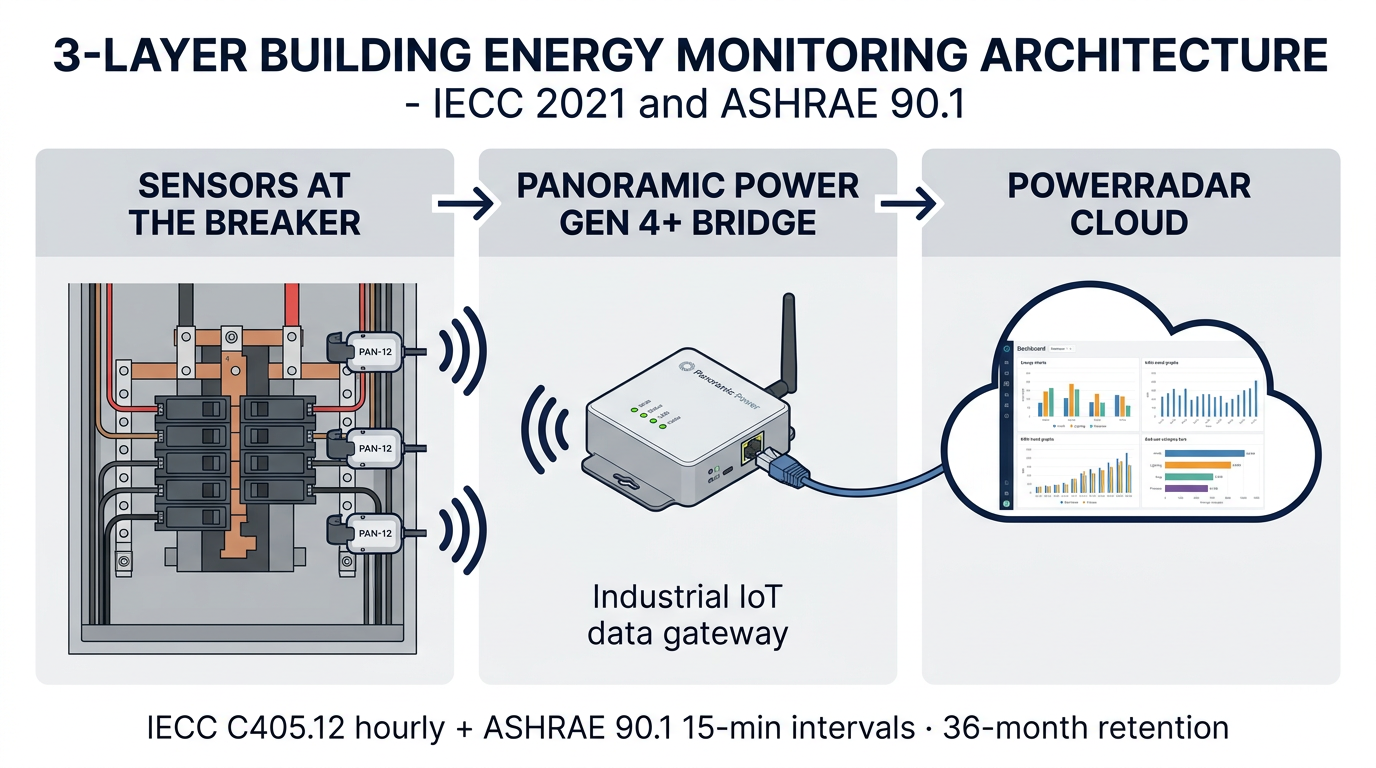
Three-Layer Compliance Architecture
Sensors at the circuit breaker → Gen 4+ Bridge on premises → PowerRadar in the cloud. The same data path satisfies IECC C405.12 hourly reporting and ASHRAE 90.1-2019 15-minute interval requirements with 36-month retention.
Read the full guide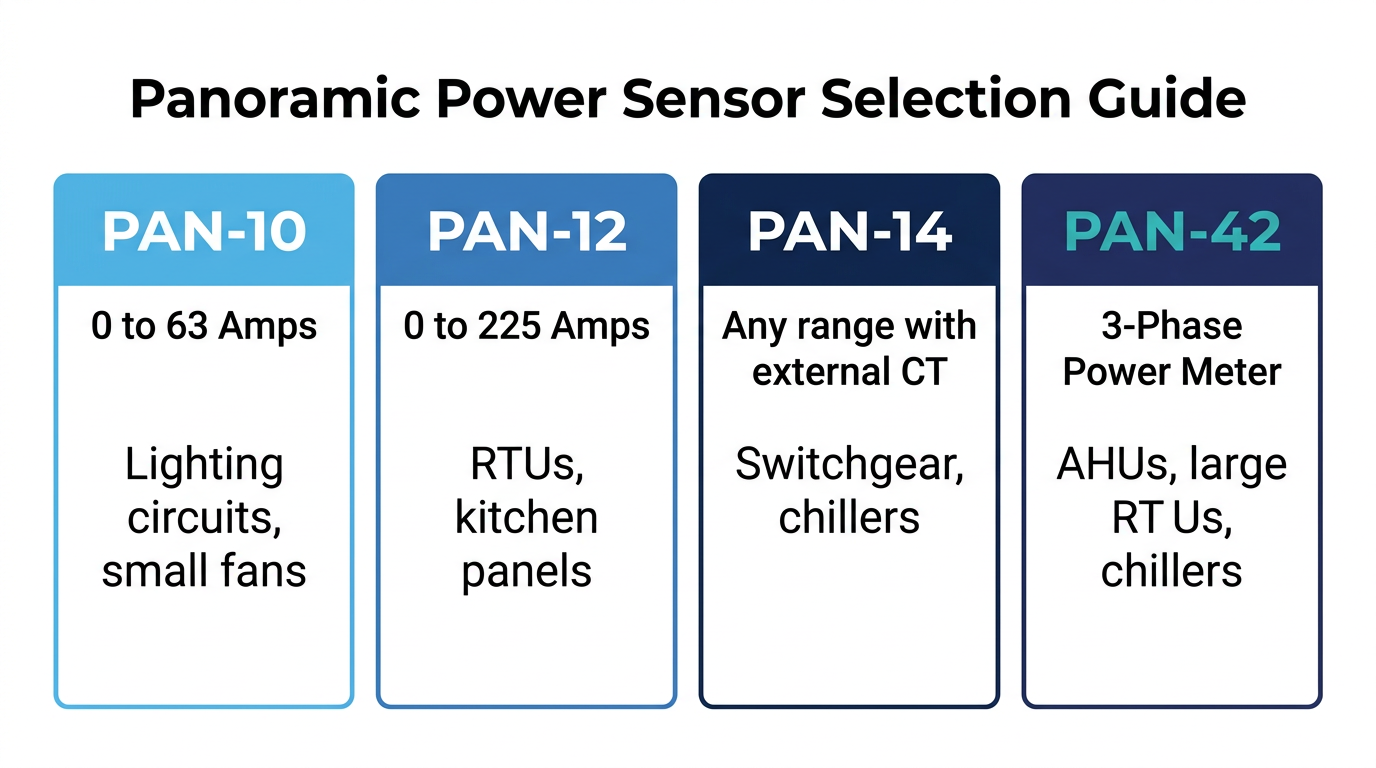
Sensor Selection Matrix
PAN-10 (0–63 A), PAN-12 (0–225 A), PAN-14 (any range with external CT), and PAN-42 (true three-phase power) mapped to typical HVAC, lighting, plug, and process loads.
Read the full guide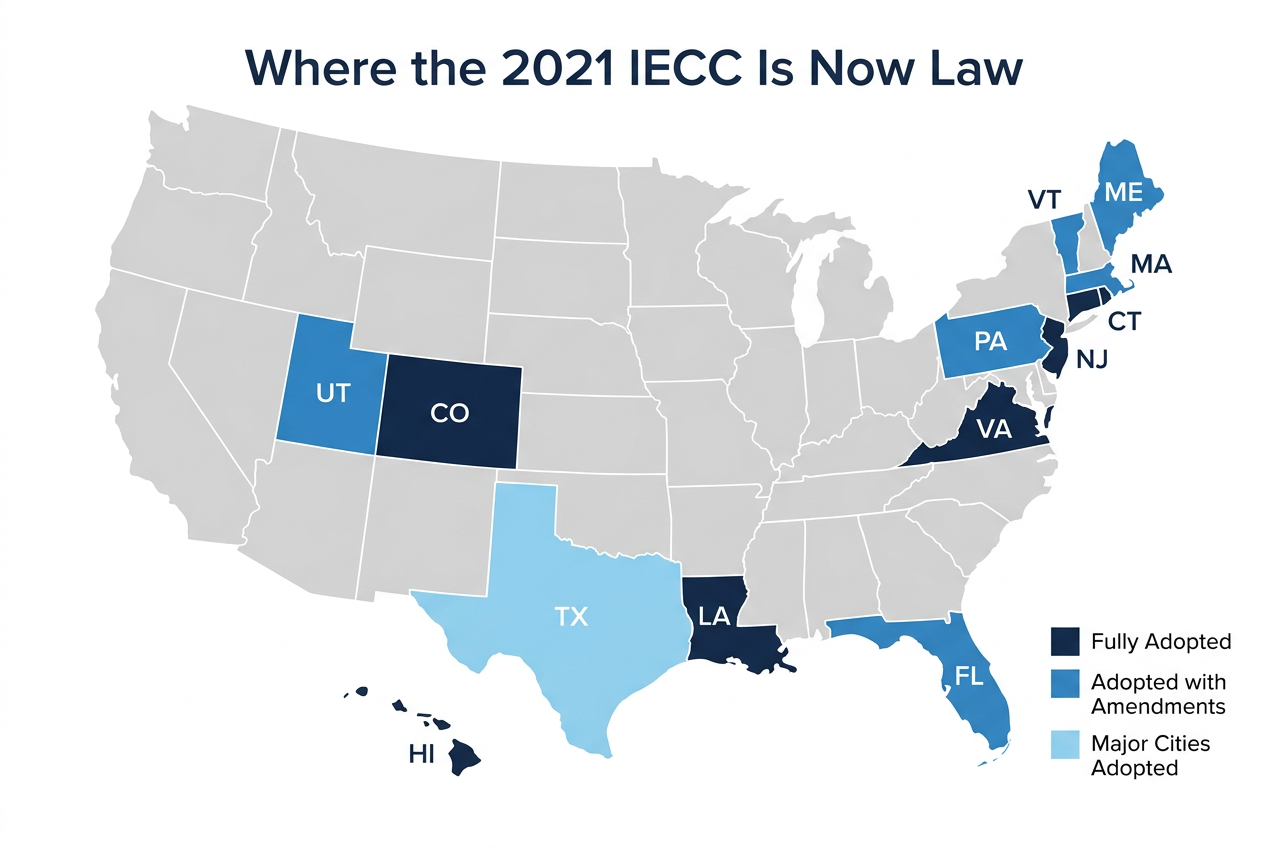
State Adoption Snapshot
Where the 2021 IECC and ASHRAE 90.1-2019 are enforceable today — fully adopted, adopted with amendments, and major home-rule cities leading state-level adoption.
Read the full guide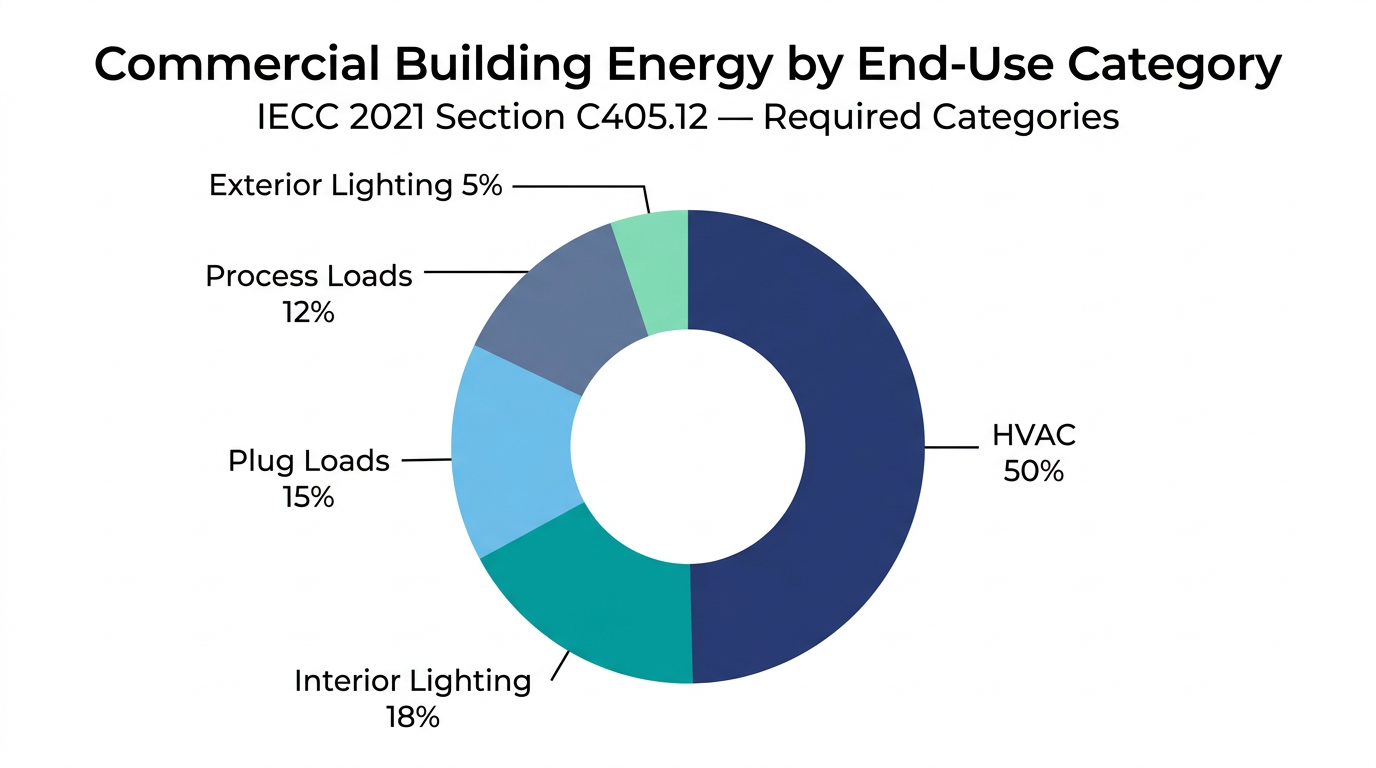
Section C405.12 End-Use Categories
The five required end-use buckets: total HVAC, interior lighting, exterior lighting, plug loads, and process loads — with the ±2% accuracy and 5% cross-category limit explained.
Read the full guide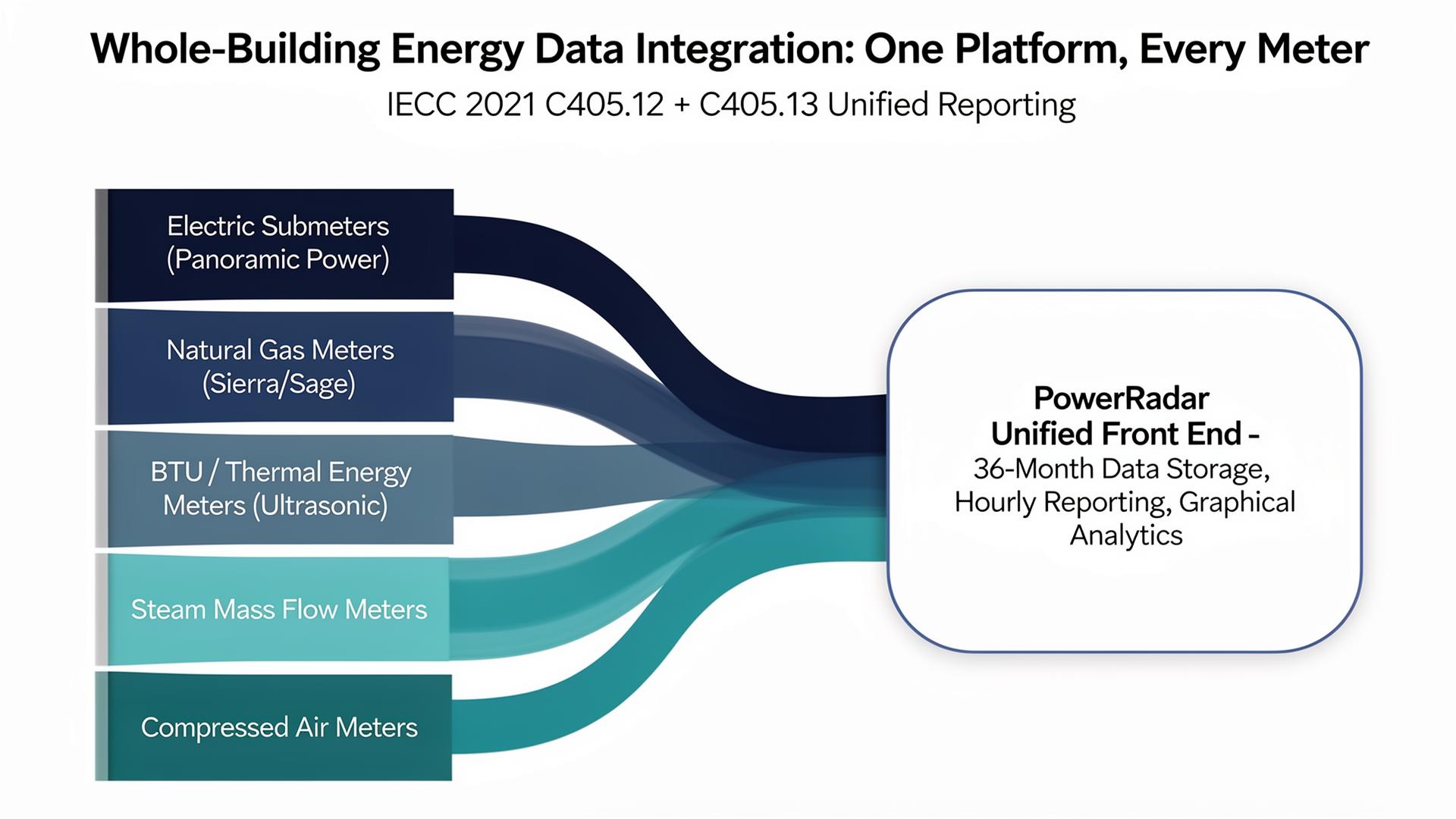
Whole-Building Data Integration
How C405.12 (electrical) and C405.13 (gas, BTU, steam, water, compressed air) merge into one PowerRadar front end via Modbus, pulse, and AcquiSuite hubs.
Read the full guide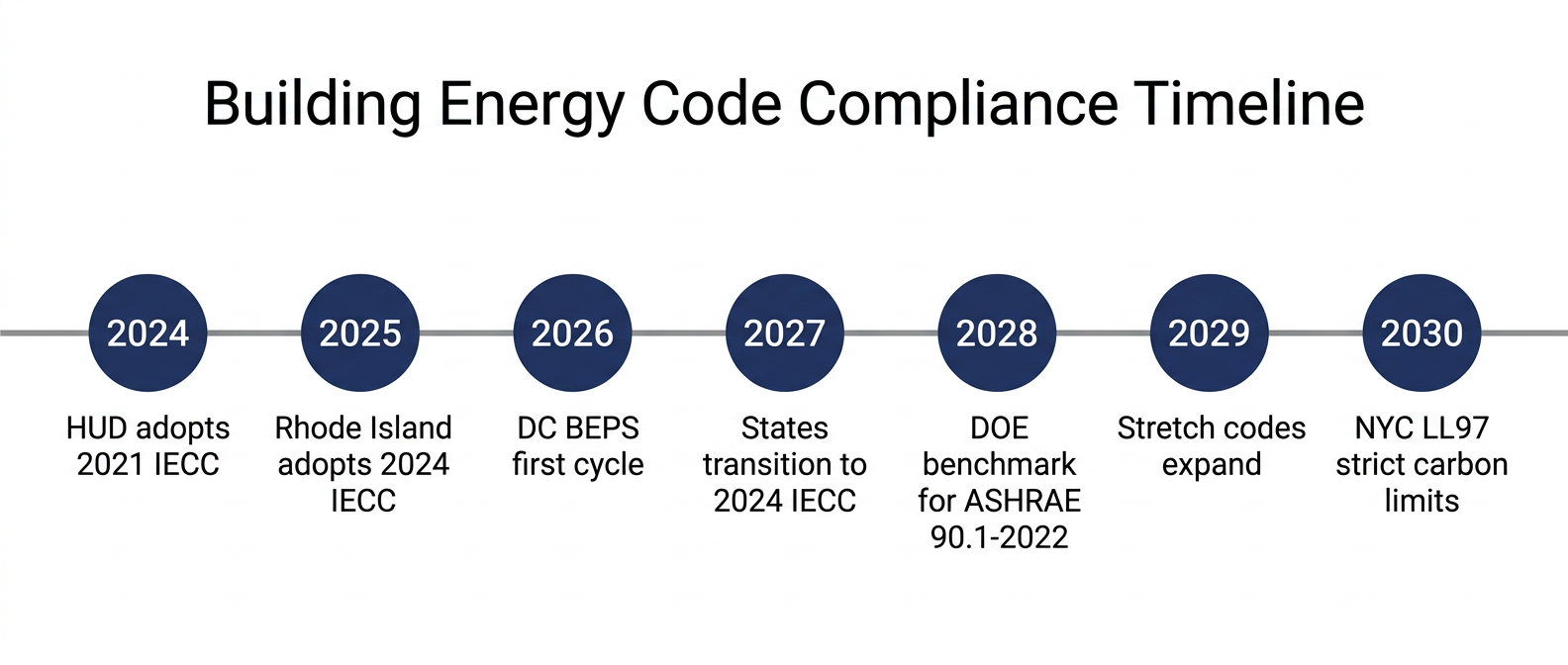
2024–2030 Compliance Timeline
ASHRAE 90.1-2022, the 2024 IECC, IRA Section 179D, NYC LL97 caps, BERDO 2.0, and DC BEPS plotted on one timeline so design teams can plan capacity for what comes next.
Read the full guideNot Sure Which Regulations Apply to Your Building?
Our team maps your portfolio against every applicable energy code and performance standard — then recommends the metering infrastructure you actually need.
Schedule a Compliance Review