IECC 2021 & ASHRAE 90.1 Submetering: Northeast & Mid-Atlantic Adoption Guide
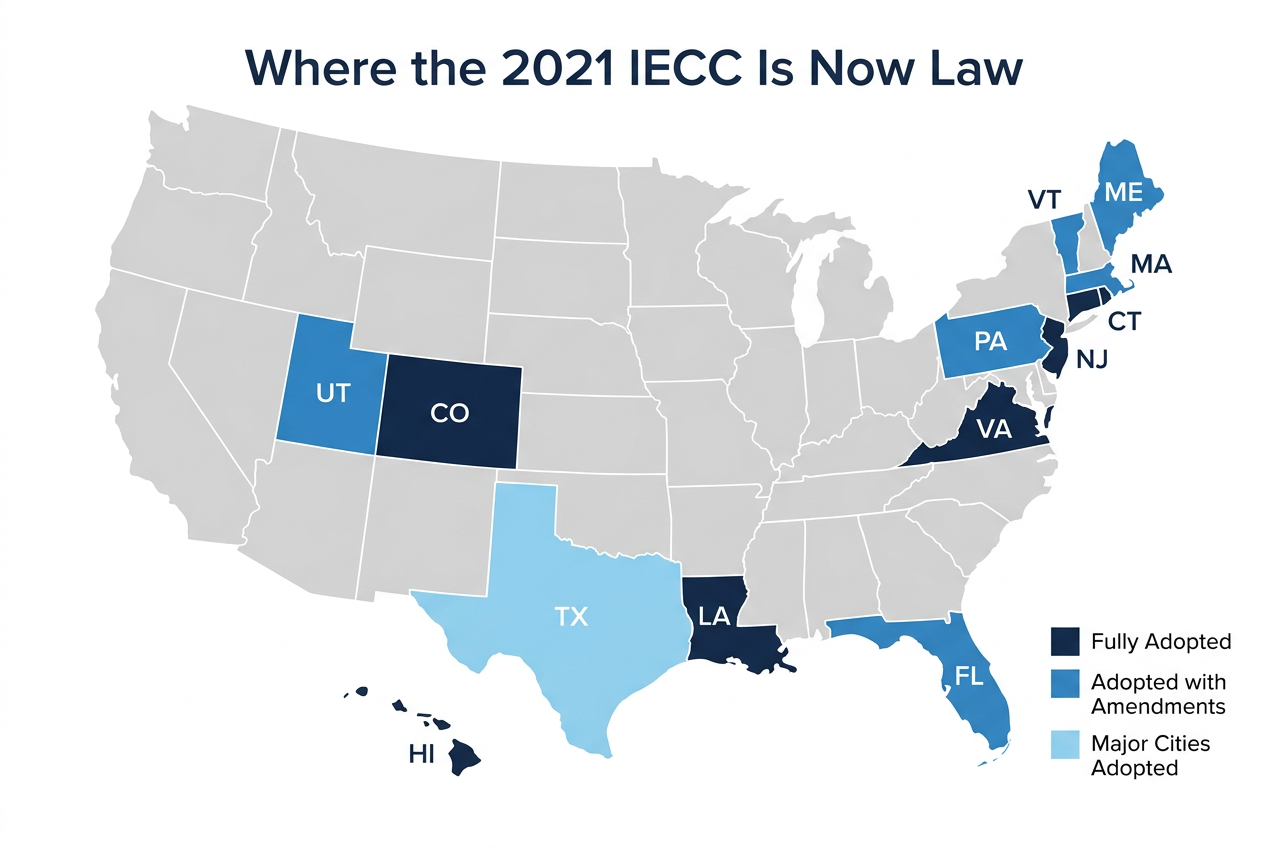
Building owners and engineers in the Northeast and Mid-Atlantic face the most aggressive wave of energy code adoption in the country. From Connecticut to Virginia, ten states are racing to adopt the 2021 IECC and ASHRAE 90.1-2019 — and several are already moving toward the 2024 IECC and 90.1-2022. This guide explains how the two standards work together, where they apply today, and how subcircuit-level wireless monitoring with a unified PowerRadar front end satisfies both at once.
How the IECC and ASHRAE 90.1 Work Together
The 2021 IECC references ASHRAE 90.1-2019 as an acceptable alternative compliance path for commercial buildings. A project can demonstrate compliance with metering requirements either by following IECC C405.12/C405.13 directly or by following ASHRAE 90.1-2019 Section 8.4.3. Both require separate monitoring of HVAC, lighting, plug, and process loads in buildings over 25,000 sq ft, both require 36-month retention, and both require graphical reporting accessible to operations personnel.
There are important differences. ASHRAE 90.1-2019 explicitly requires 15-minute data intervals, demand (kW) measurement, and power factor recording on whole-building meters. The 2021 IECC requires hourly reporting at minimum but is silent on power factor. ASHRAE 90.1-2022 adds site-level metering (parking lots, EV charging, on-site solar) and the new Section 11 Energy Credits framework. The 2024 IECC mandates renewable-ready and electric-ready provisions and tightens additional efficiency credits in Section C406.
For most engineering firms, the practical answer is to design to the more stringent of the two — typically ASHRAE 90.1-2019 intervals and demand measurement layered on top of IECC end-use disaggregation. That combined approach satisfies any AHJ in any adopting jurisdiction.
The Northeast and Mid-Atlantic Surge
Massachusetts
2021 IECC base code (780 CMR Ch 13). Two opt-in tiers: Stretch Code (mandatory for the 300+ Green Communities) and Specialized Code (the country's most aggressive, near-zero target). All three require C405.12 monitoring, with Stretch and Specialized layering performance validation requirements.
Connecticut
Full 2021 IECC adopted Oct 2022 with no weakening amendments. CGS 29-252b grants the State Building Inspector authority to adopt model codes within 18 months of publication — likely first to adopt the 2024 IECC.
Vermont
2024 Vermont Residential and Commercial Building Energy Standards based on 2021 IECC with state-specific requirements. The "Package Plus Points" compliance system means enhanced monitoring beyond the minimum directly earns points.
New Jersey
ASHRAE 90.1-2019 without amendments (Sept 2022). Optional 2021 IECC Appendix CC zero-energy provisions. Full requirements: 15-minute intervals, 36-month retention, remote accessibility, demand and power factor on whole-building meters.
Virginia, Rhode Island, Maine, Delaware, Maryland, DC, New York
Virginia incorporated 2021 IECC + 90.1-2019 (effective Jan 2024). Rhode Island is the first Northeast state on a 2024 IECC-based code (Dec 1, 2025). Maine uses 2021 IECC as base. Delaware adopted a 2024 IECC-based code with EV/solar-ready appendices. Maryland, DC, and New York are in active 2024 IECC review.
Why Subcircuit Monitoring Is Especially Critical in the Northeast
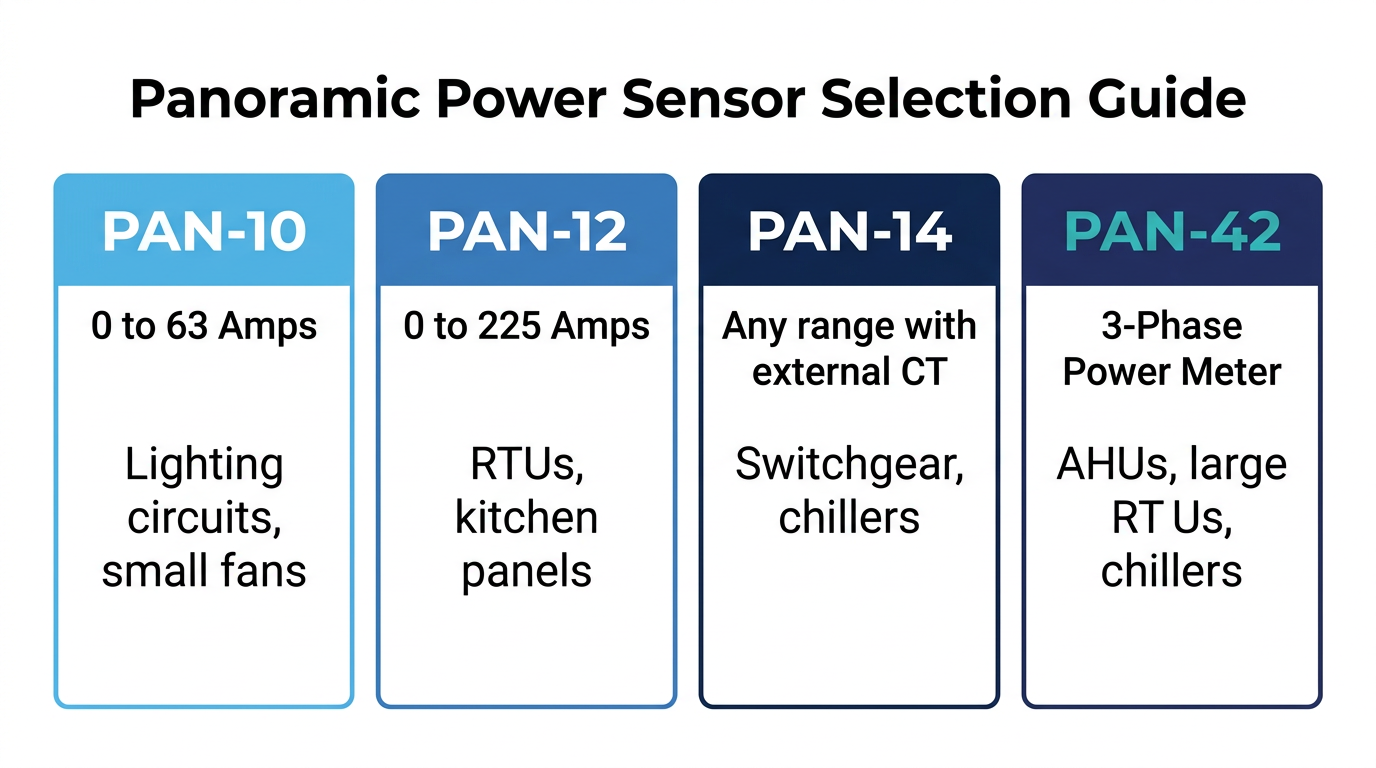
- Dense urban construction — Tight floor plates require small sensors. The PAN-10 measures roughly 34 × 29 × 43 mm and fits the tightest panels.
- Mixed-use buildings — Retail/office/residential/parking combinations need independent end-use tracking even when circuits share infrastructure.
- Occupied building renovations — Self-powered sensors install in 2–3 minutes per circuit with no de-energization.
- Cold-climate HVAC complexity — Climate Zones 5A, 6A, 7 need verification that heating and cooling are not running simultaneously and that ERVs are actually reducing heating loads.
- Multi-tenant cost allocation — Subcircuit data enables fair, usage-based tenant billing — a competitive advantage in tight leasing markets.
Mapping End-Use Categories to Sensors
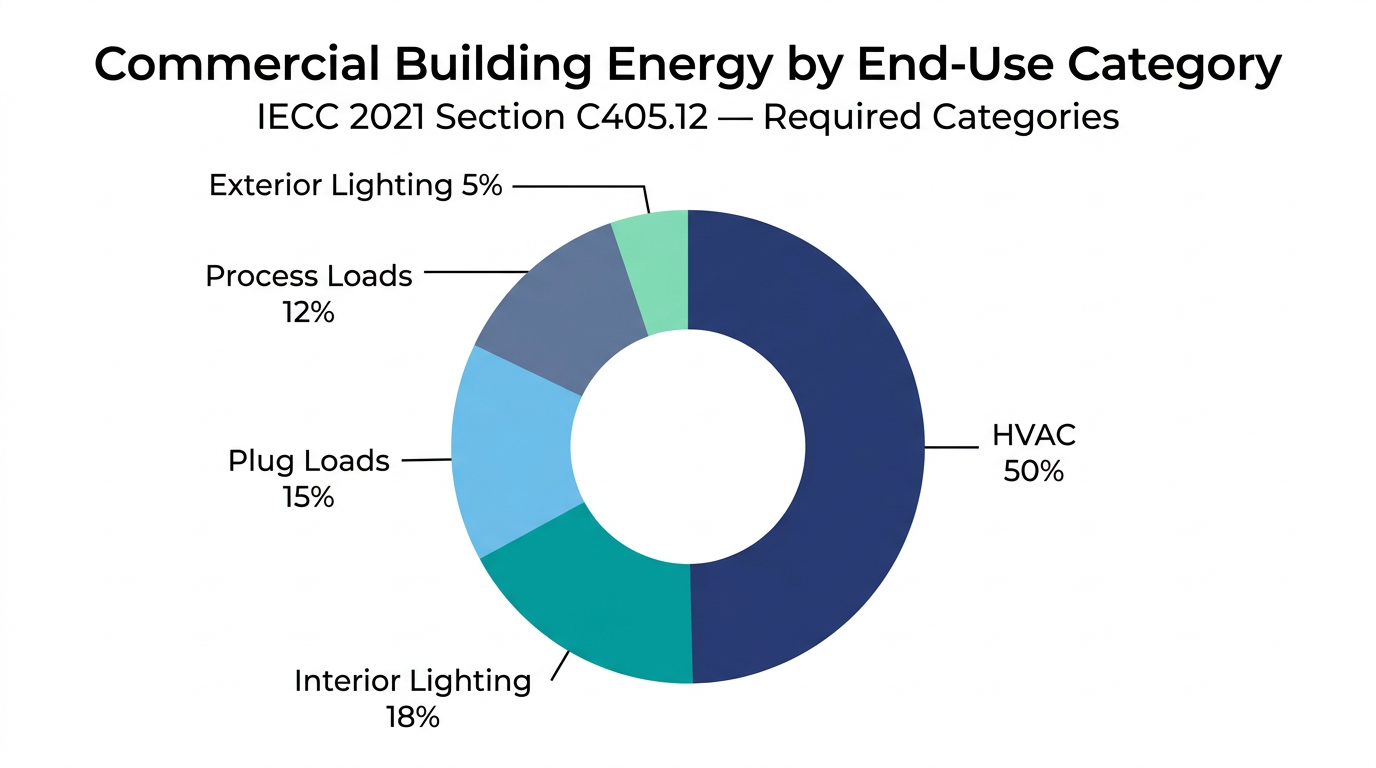
| End-Use Category | Recommended Sensor | Notes | | --- | --- | --- | | HVAC — RTUs / AHUs / Chillers | PAN-42 + sized CTs | True 3-phase power for IECC and ASHRAE | | HVAC — pumps and small fans | PAN-12 or PAN-14 | Use VFD input for variable-speed | | Interior Lighting | PAN-12 on panel feed, or per-circuit PAN-10 | Or Leviton S7100 for full-panel disaggregation | | Exterior Lighting | PAN-10 / PAN-12 on contactor feeds | Captures site lighting separately | | Plug Loads | PAN-12 on receptacle panel, or S7100 | Per-circuit visibility for tenant billing | | Process Loads | PAN-42 on elevators, kitchens, data rooms | Captures non-HVAC large loads |
Emergent's Regional Presence
Emergent Metering is headquartered in West Chester, PA — at the geographic center of the Northeast and Mid-Atlantic adoption wave. Same-day or next-day shipping from Connecticut to Virginia. Engineering staff attend state code hearings and know each jurisdiction's amendments. The pre-configured AHU Metering Package ($1,300) bundles a PAN-42, cellular Gen 4+ Bridge, and sized CTs — installable in under an hour per unit.
For whole-building monitoring across all energy types, Packaged Panels combine metering hardware, power supplies, bridges, and integration components in weatherproof ABS enclosures. They arrive ready to mount with all internal wiring tested — reducing field labor and ensuring code compliance from day one. All data flows into PowerRadar alongside individually installed sensors, Leviton BCMs, and pulse-connected non-electric meters.
Building in the Northeast or Mid-Atlantic? Submit a Project Intake Form with your electrical one-lines for a custom sensor specification, or call 215-645-7141 to speak with an engineer who knows your local code inside and out.
Related Energy Intelligence Posts
The Hidden 30%: Where Your Building Is Bleeding Energy (And How to Find It)
Mar 4, 2026 · 6 min read
Continuous Improvement in Manufacturing: Leveraging Metering, Sensors, and Automation for Operational Excellence
Mar 1, 2026
Preventative Maintenance in Manufacturing: How Utility Metering and Sensor Data Eliminate Unplanned Downtime
Mar 1, 2026
About Emergent Metering Solutions
Emergent Metering Solutions provides commercial and industrial metering hardware, installation support, and energy analytics services. We specialize in electric meters, water meters, BTU meters, compressed air meters, gas meters, and steam meters with Modbus RTU, BACnet IP, pulse output, and wireless communication options. Our Managed Intelligence services deliver automated reporting, anomaly detection, tenant billing, and AI-powered consumption forecasting. We support compliance with IECC 2021, ASHRAE 90.1-2022, NYC Local Law 97, Boston BERDO 2.0, DC BEPS, California LCFS, and EU CSRD requirements.
Contact our engineering team for meter selection guidance, system design, and project quotes.