
The Complete Guide to Steam Metering: Types, Quality, and the Best Flow Measurement Technologies
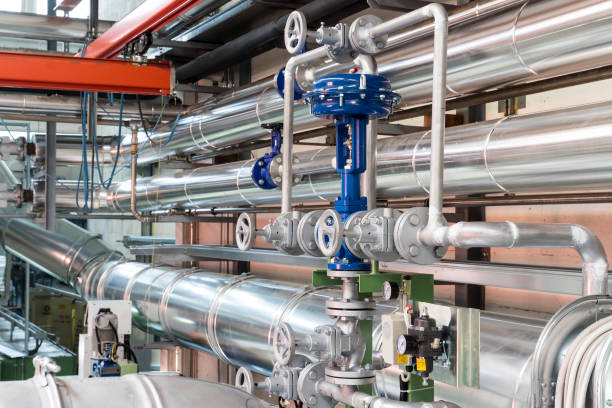
Steam is a vital energy carrier. Industries use it worldwide for heating, humidification, and more. Steam metering, however, can be challenging. This is due to steam's unique properties and varied uses.
This guide covers all key aspects of steam metering. It explains steam quality, measurement technologies, and best practices. You will learn how to achieve accurate and reliable measurements.
Understanding Steam as an Energy Carrier
Steam has unique properties. These properties make it challenging to measure. Let's explore these characteristics.
What Are the Different Steam States and Quality?
Steam exists in various states. Each state has different energy content. They also have different measurement needs.
- Saturated steam: This steam is at its boiling point. This point matches its pressure. At atmospheric pressure, it's 212°F (100°C). In industrial systems, it can reach 338°F to 366°F. Saturated steam carries latent heat. This is the energy to change water from liquid to vapor.
- Superheated steam: This steam is heated above its saturation temperature. This happens at a given pressure. Superheated steam carries sensible heat. This is the energy to raise its temperature further. It's common in power generation and intense industrial processes.
- Wet steam: This is a mix of saturated steam and water droplets. Steam quality shows the vapor percentage. For example, 95% quality means 95% vapor. Wet steam is common in distribution systems. Heat loss causes condensation here.
Why Does Steam Quality Impact Metering?
Steam quality directly affects measurement accuracy. Most flow meters are for single-phase flow. This means all vapor or all liquid.
Wet steam (two-phase flow) creates errors. Liquid droplets cause significant inaccuracies. A vortex meter for dry steam will overstate mass flow with wet steam. Liquid water is much denser than vapor. Errors of 5-15% are common in such cases.
Steam metering projects must first assess steam quality. If it's below 95%, improve it. Use moisture separation or adjust calculations.
Steam Flow Measurement Technologies
Several technologies measure steam flow. Each has pros and cons.
Differential Pressure (DP) Flow Meters
DP flow meters are widely used. They are also the oldest technology. They create a pressure drop across a pipe restriction. Examples are orifice plates, flow nozzles, or Venturi tubes. The flow rate relates to the square root of the pressure difference.
Advantages:
- Well-known and tested technology.
- Relatively low initial cost.
- Works for various pipe sizes and flow rates.
- Follows ISO 5167 standards for predictable results.
Limitations:
- Permanent pressure loss increases energy costs.
- Limited turndown ratio (about 4:1).
- Orifice plates are sensitive to erosion and flow issues.
- Impulse lines can clog or freeze.
Best applications:
- Large pipes (6" and up), steady flow.
- Where DP meters are already in use.
Vortex Flow Meters
Vortex flow meters measure vortex frequency. A bluff body creates these vortices. Frequency directly relates to flow velocity. This provides a linear signal.
Advantages:
- Linear output and excellent turndown (20:1 or better).
- No impulse lines or moving parts, low maintenance.
- Not very sensitive to fluid property changes.
- Good accuracy (±1% of reading) over broad flow ranges.
Limitations:
- Needs minimum Reynolds number, limiting low-flow measurement.
- Bluff body creates a small, permanent pressure loss.
- Pipe vibration can affect frequency detection.
- Requires adequate straight pipe sections.
Best applications:
- Medium pipes (2"-12"), variable flow.
- When low maintenance and good turndown are priorities.
Ultrasonic Flow Meters
Ultrasonic flow meters measure flow velocity. They use ultrasonic pulses. Two types exist:
- Transit-time meters: Measure time difference between upstream and downstream pulses.
- Doppler meters: Measure frequency shift from particles or bubbles.
Advantages:
- No pressure loss (non-intrusive).
- No moving parts, minimal maintenance.
- Clamp-on versions for retrofits.
- Excellent turndown and accuracy.
Limitations:
- Transit-time meters need clean, single-phase flow.
- Clamp-on meters are less accurate than inline types.
- High cost for high-temperature steam.
- Pipe wall condition impacts clamp-on accuracy.
Best applications:
- Large pipes where pressure loss is an issue.
- Retrofit applications, clean steam applications.
Turbine Flow Meters
Turbine flow meters use a spinning rotor. Its speed is proportional to flow velocity. Magnetic or optical sensors detect rotation. This converts to a flow rate.
Advantages:
- High accuracy (±0.5% of reading) and repeatability.
- Good turndown (10:1 to 20:1).
- Suitable for custody transfer.
Limitations:
- Moving parts need regular maintenance and calibration.
- Susceptible to damage from wet steam and debris.
- Bearing wear limits service life.
- Not ideal for low-flow conditions.
Best applications:
- High-accuracy tasks like custody transfer.
- Clean, dry steam at moderate to high flow rates.
Calculating Steam Energy
Measuring steam flow rate is not enough. You also need its energy content (enthalpy). This is crucial for determining energy consumption.
Steam enthalpy depends on pressure, temperature, and quality. For saturated steam, it's a function of pressure. Steam tables provide values. For superheated steam, measure both pressure and temperature for enthalpy.
The energy flow rate calculation is:
Energy (Btu/hr) = Mass Flow (lb/hr) × Enthalpy (Btu/lb)
For net energy delivered (with condensate return):
Net Energy (Btu/hr) = Mass Flow (lb/hr) × (Steam Enthalpy - Condensate Enthalpy)
Modern flow computers automate these calculations. They use real-time pressure and temperature data. This determines enthalpy and calculates energy flow.
Best Practices for Steam Metering
Follow these best practices for steam metering. They are based on years of experience.
- Assess steam quality early: Use a quality indicator or calorimeter. Do this at the proposed metering point. If quality is below 95%, install a moisture separator upstream.
- Ensure adequate straight runs: Most meters need straight pipe sections. Typically 15-25 pipe diameters upstream. And 5-10 pipe diameters downstream. Insufficient straight runs cause inaccuracy.
- Install pressure and temperature sensors: Even with a mass flow meter, add these sensors. They are vital for energy calculations. They also verify steam conditions.
- Account for condensate: In closed-loop systems, measure condensate return. Include flow and temperature. This ensures accurate net energy calculation. Ignoring it can greatly overestimate energy use.
- Implement regular maintenance: All steam meters need periodic care. This includes calibration checks. Also, inspect for erosion or fouling. Replace worn parts as needed.
- Use flow computers for energy calculation: Dedicated flow computers are best. They provide more accurate energy data. This is better than simple flow totalizers. They update enthalpy values continually. This uses real-time pressure and temperature.
Emergent Metering offers expert steam metering solutions. We help industrial and commercial facilities. Our team guides you in choosing the right technology. We design and install metering systems. We also integrate steam data. This allows comprehensive energy monitoring and optimization.
Selecting the Right Steam Metering Solution for Your Facility
Choosing a steam metering solution takes careful thought. Consider your operating conditions. Think about accuracy needs. Also, consider long-term maintenance.
Step 1: Check Your Steam Quality
Start with steam quality. If it's wet (below 95%), beware. Technologies like vortex meters and orifice plates are sensitive. They will underreport flow. They will also wear faster. Consider multivariable meters that adjust for quality. Or, install a steam separator upstream. This improves quality before measurement.
Step 2: Evaluate Your Flow Range
Most steam systems have varied loads. There is peak demand and minimum turndown. A meter with a 10:1 turndown may miss low-load conditions. This leads to underreporting off-peak. For wide load variations, seek 20:1 turndown or better.
Step 3: Consider Installation Constraints
Some technologies need long straight pipe runs. About 15–20 pipe diameters upstream. And 5–10 downstream. If space is limited, consider alternatives. Insertion-style or ultrasonic meters need shorter runs. They might be your only practical choice.
Step 4: Factor in Total Cost of Ownership
The purchase price is only part of the cost. Over 10 years, it's often less than half. Maintenance, calibration, downtime, and parts add up. They can exceed the initial investment. Technologies without moving parts (vortex, ultrasonic) usually cost less to maintain. Others with wear-prone parts (orifice plates, turbine meters) cost more.
Step 5: Plan for Data Integration
Modern steam metering should provide digital output. This should be compatible with your building automation or energy management system. Analog-only meters offer limited value. They only track periodic consumption. Digital meters with communication protocols are better. Protocols include BACnet, Modbus, or wireless. They allow continuous monitoring and automated reporting. They also integrate with your energy intelligence infrastructure.
New steam metering investments often pay back quickly. Typically within 12–18 months. Steam is a highly expensive utility. Even small improvements save money. Reducing leaks or optimizing condensate return helps. Depending on system size, savings can be $20,000–$100,000 per year.
Related Articles
Green Building United 2026 Sustainability Symposium: What to Expect After a Landmark 2025 Event
Mar 14, 2026 · 8 min read read
Energy Code Compliance Is Coming for Your Building — Are You Ready?
Mar 10, 2026 · 8 min read read
LCFS EV Charging Credits in 2026: How Metering Unlocks Maximum Credit Revenue
Mar 5, 2026 · 10 min read
About Emergent Metering Solutions
Emergent Metering Solutions provides commercial and industrial metering hardware, installation support, and energy analytics services. We specialize in electric meters, water meters, BTU meters, compressed air meters, gas meters, and steam meters with Modbus RTU, BACnet IP, pulse output, and wireless communication options. Our Managed Intelligence services deliver automated reporting, anomaly detection, tenant billing, and AI-powered consumption forecasting. We support compliance with IECC 2021, ASHRAE 90.1-2022, NYC Local Law 97, Boston BERDO 2.0, DC BEPS, California LCFS, and EU CSRD requirements.
Contact our engineering team for meter selection guidance, system design, and project quotes.